
3-Season vs 4-Season Rooms: Which Addition is Right For You?
Posted on May 21, 2026There are a lot of options to evaluate when you are considering a home addition. Even if you know what you want, there will still be a lot to consider. When it comes to home additions, especially things like sunrooms or enclosed patios, homeowners often have to weigh 3-season vs 4-season rooms. Here’s what to consider to help determine which addition is right for you:
5 Key Differences Between 3-Season and 4-Season Additions
These are some of the key differences between 3-season and 4-season rooms:
- Usage
- Construction
- Climate control
- Cost
- Building codes
1. Usage
While 4-season additions are designed to be comfortable for use in any weather and any season, 3-season additions are built for comfort in mild weather and are generally not suitable for use in wintry conditions or colder temperatures. 4-season rooms are fully-insulated and climate-controlled for year-round comfort, while 3-season rooms do not typically have permanent, built-in heating or cooling systems.
2. Construction
Because 4-season additions are meant to be used year-round in any season, they are built with stronger frames, framing materials designed to insulate, more insulation overall, and usually also windows with insulated glass for better heat reduction in the summer and heat retention in the winter.
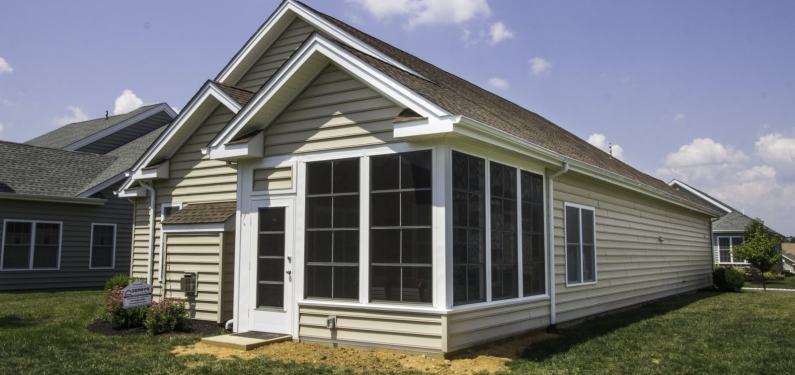
3-season additions are still built to block out weather, like rain and wind, but they are built with lighter framing and enclosed with large screens or windows. This is one of the reasons they are a popular way to upgrade a patio and turn it into a patio enclosure. However, 3-season rooms are not designed for extreme temperatures. They may be too hot in extreme summer temperatures and are not built to stay warm and comfortable when temperatures drop in the winter.
3. Climate Control
Although they do have airflow via screens or windows and ceiling fans, 3-season rooms do not typically connect to your home’s HVAC system or have built-in climate control. Since 4-season additions are built to be used year-round, they are usually connected to your home’s HVAC system or have their own mini-split system for heating and cooling.
4. Cost
Several factors go into the cost of a home addition. In general, a 4-season addition will carry a higher installation cost than a 3-season addition because you need to account for year-round insulation and comfort. This also means it tends to deliver a higher value as well.
However, installation costs will vary, depending on the size, features, materials, and more of the addition. It could be entirely possible for a large 3-season addition with complex features and premium materials to require more budget than a smaller, simpler 4-season addition. It all depends on the addition design and other construction considerations for a specific build.
5. Building Codes
Permits and building codes for 3-season and 4-season additions will vary. There will be different building codes and requirements for additions that are attached to the main house versus those that are detached, freestanding structures. Because it has four walls, electrical requirements, and HVAC compatibility, a 4-season addition also tends to have more building code requirements and stricter permits.
What to Consider When Choosing Between 3-Season and 4-Season Additions
Here are some things to consider when you are evaluating whether 3-season or 4-season additions are right for you:
- Will you want to use your home addition year-round?
- Does it get really hot in the summer?
- Do you want your home addition to increase the livable square footage of your home?
- How will you want to use your home addition?
- What is your budget for a home addition?
1. Will You Want to Use Your Home Addition Year-Round?
One of the biggest considerations when determining whether a 3-season addition or a 4-season addition is right for you is how much you want to use your new home addition and in what seasons. Both will give you additional space and natural light, but how long you can comfortably use the space will be different.
If you want to be able to use your home addition comfortably year-round, no matter the weather or temperature, then a 4-season addition is a better match for your needs. If you’re happy using your addition in the spring, summer, and fall, then a 3-season addition will fit your needs.
A vertical 4-track addition is a 3-season room that provides durable windows with lightweight panels that are easy to operate and allow you to control airflow in and across the space. These are some benefits of vertical 4-track patio enclosures that can help you make the most of your 3-season addition. This is also why a vertical 4-track room is a good option to consider if you are thinking about a 3-season addition.
2. Does it Get Really Hot in the Summer?
Even if you don’t think you will want to use your addition in the winter, you still need to consider the average temperatures of the other seasons for a 3-season addition. A 3-season addition usually does not have built-in climate control, which is why it is designed for use in mild or moderate weather.
If temperatures tend to soar in the summer and stay uncomfortably hot for several days in a row, it may not be comfortable to use your 3-season room during that time. If you live in an area with more extreme summers and winters and a short fall that gets cold earlier, a 4-season addition may be a better option. Otherwise, you might only reliably be able to use your 3-season room comfortably for one or two seasons.
3. Do You Want Your Home Addition to Increase the Livable Square Footage of Your Home?
Although a 3-season room will still add value and add more space to your home, a 4-season addition can add livable square footage to your home. This is why a 4-season addition adds so much value to your home; it increases the overall square footage of your home when it is climate-controlled and attached to the home.
Depending on the design and building requirements, a 4-season addition could even qualify as another bedroom! This is also something to consider when planning for your sunroom addition or another type of 4-season addition.
4. How Will You Want to Use Your Home Addition?
How you want to use your home addition can also determine whether a 4-season or a 3-season addition is right for you. One of the benefits of a sunroom or patio enclosure is having more functional space for your home.
If you just want to entertain or enjoy your outdoor space in mild seasons without having to worry about weather conditions or bugs, a 3-season addition can provide that for you. These are factors to consider when planning 3-season porches and additions. If you want to be able to do those things no matter the season or the weather outside, or use your addition for a specific purpose year-round, then a 4-season addition will be the option that provides that for you.
5. What is Your Budget For a Home Addition?
Whether you are building a new addition or enclosing a deck or patio, both 3-season rooms and 4-season rooms are options. If you think you would be equally happy with a 3-season or a 4-season addition, your budget could help you determine which one suits your situation better. All other things being the same, a 4-season addition requires more materials and construction, which increases the cost.
If you’re trying to keep your new addition within a certain budget, a 3-season room may suit your needs more. Your ongoing energy usage and costs may be lower with a 3-season addition over a 4-season addition, but your usage of the space will also be limited to specific seasons and weather conditions. This is why energy efficiency is one of the things to look for in sunroom additions.
Both types of additions are home upgrades that add value to your home. Because of year-round comfort and additional square footage, a 4-season tending to add a bit more value over a 3-season. A 4-season addition will also offer more long-term flexibility in how it can be used because it is a fully-insulated and climate-controlled room that can be used throughout the year.
Build Your Home Addition With Zephyr Thomas
When it comes to 3-season vs 4-season rooms, these are just a few considerations to help determine which home addition is right for you. A good home improvement contractor will be able to walk you through the options and considerations to help you choose the features for your home addition that will best meet your needs and help you accomplish your home improvement goals. If you’re ready to get started on your new home addition, contact Zephyr Thomas at 717-399-4708 to schedule your free consultation and estimate!
Check out the time-lapse video below to see the Zephyr Thomas team building a 4-season home addition with a deck for this homeowner!