
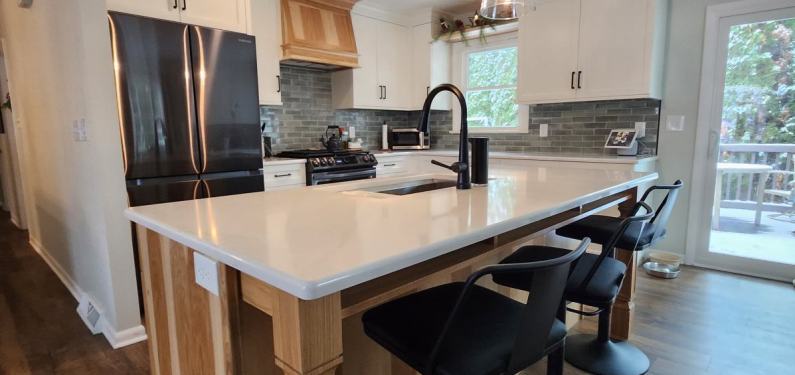
Why is Ventilation Important in the Kitchen?
Posted on January 29, 2026Taking the opportunity to remodel your kitchen is exciting. You can finally renovate and update your kitchen to match your needs and your style. It’s easy to get caught up in the design updates and overlook ventilation. Good ventilation is essential in the kitchen. Plus, the different types of ventilation can be designed to help enhance the overall look and feel you want. Why is ventilation important in the kitchen? Here’s why ventilation is important in the kitchen, and a few types of ventilation hoods to consider for your kitchen remodel:
Why is Ventilation Important in the Kitchen?
Good ventilation is important in every room of your home, and especially in high-traffic, high-moisture environments, like the kitchen. These are the reasons why kitchen ventilation is important:
- Keeps the kitchen more comfortable
- Improves air quality
- Reduces risk of mold and mildew
- Protects surfaces
- Extends the lifespan of appliances
- Controls odors and smoke
- Prevents false smoke alarms
1. Keeps the Kitchen More Comfortable
One of the reasons good kitchen ventilation is important is that it controls heat and humidity to keep the kitchen more comfortable. Good ventilation systems will help remove heat and humidity. Not only does this keep the kitchen from becoming too hot or humid, but it also helps prevent your heating and cooling system from running unnecessarily to deal with the heat produced by the kitchen.
Poor ventilation is often a reason why your house is so humid, and it can cause other issues, too. Poor ventilation in different areas of your home can make it harder for your heating and cooling systems to maintain a consistent temperature. This makes them less efficient and can be a way you might be losing money on your energy bills.
2. Improves Air Quality
Cooking can release a lot of smoke, pollutants, contaminants, smells, etc. The cooking fumes from gas stoves can also be harmful over time and contribute to respiratory issues. Good kitchen ventilation and using it appropriately improves indoor air quality. Not only does this make it more comfortable for you in the kitchen, but it also reduces the amount of airborne contaminants and irritants you’re breathing in.
This is important for everyone, but is especially important for anyone who has asthma, respiratory conditions, chronic health conditions, or a compromised immune system. Using the range hood, opening a window, and running a fan are all ways to improve kitchen ventilation and create a better environment in the kitchen while cooking.
3. Reduces Risk of Mold and Mildew
Just like a lot of moisture in the bathroom can increase the risk of mold and mildew growth, so can extra humidity and moisture in the kitchen. Having a good exhaust fan, using it properly, opening a window, and more are tips for good bathroom ventilation, and help reduce the risk of mold and mildew in a bathroom.
Similarly, good kitchen ventilation controls heat and humidity and reduces moisture to reduce the risk of mold and mildew on kitchen surfaces. A good range hood with an exhaust fan and a kitchen window makes a big difference in kitchen ventilation.
If your current kitchen doesn’t have a window and you need to add one, or the window that’s there needs to be replaced, there are several popular kitchen window styles to consider. Casement windows and double-hung windows are the most common, but picture windows, sliding windows, garden windows, or bay windows are other popular options for kitchen windows.
4. Protects Surfaces
Cooking produces grease, moisture, and other things that can build up on your kitchen surfaces. Over time, this can damage your surfaces and cause them to deteriorate. They will also likely become discolored along with the damage.
In addition, the buildup of grease on kitchen surfaces and in filters is a fire risk. Good kitchen ventilation helps prevent this buildup. In turn, this helps protect your surfaces, makes them last longer, and makes them easier to clean and maintain. This is also one of the many reasons why ignoring or not thinking about ventilation is a kitchen remodeling mistake to avoid.
5. Extends the Lifespan of Appliances
In addition to protecting kitchen surfaces and extending their lifespans, good kitchen ventilation also helps extend the lifespan of your appliances. Reducing the amount of grease and heat that stays on your cooking appliances and keeping grease and heat away from other appliances in the kitchen helps them last longer, too.
6. Controls Odors and Smoke
Another reason why ventilation is important in the kitchen is that it helps control odors and smoke. Cooking can produce a lot of different smells on top of steam and smoke. Lingering odors can also affect other meals being prepared in the kitchen.
Smells can also affect the way you perceive taste, which means lingering odors from cooking could even affect your enjoyment of the food you’ve made. Instead of letting odors and smoke accumulate and linger in and around your kitchen, good kitchen ventilation filters them out. You’ll still be able to smell what you’re cooking, but it won’t overwhelm your house and stick around longer than you want it to.
7. Prevents False Smoke Alarms
Smoke alarms near the kitchen will often go off when they sense a lot of heat or smoke. This can make cooking a louder and more stressful experience. Although you may still encounter it every now and then, depending on what you are cooking and your smoke alarm, good kitchen ventilation helps prevent and reduce false smoke alarms. It can help filter out smoke and heat and keep it to manageable levels that don’t make your smoke alarms go off when there isn’t an issue.
9 Types of Ventilation Hoods For Kitchens
Ventilation is just one of the things to consider when remodeling a kitchen. In addition to other types of ventilation and ways to improve kitchen ventilation, like having windows, there are several types of ventilation hoods available. Plus, range hoods are available in various styles, mounts, and ventilation systems.
With so many options available, you’re bound to find a type and style of range hood that works the way you need it to and looks the way you want it to. Here are a few types of ventilation hoods for kitchens to inspire you as you think about what you want in your new kitchen:
- Wall-mounted hood
- Insert hood
- Under-cabinet hood
- Island hood
- Downdraft hood
- Over-the-range microwave
- Ducted hood
- Ductless hood
- Convertible hood
1. Wall-Mounted Hood
Wall-mounted range hoods are installed over ranges that sit along a wall. Although not always, they often extend to the ceiling with ductwork exposed in a chimney or canopy design. Sometimes, upper cabinets are built around the ductwork to hide it from view and get a little extra storage above the range.
2. Insert Hood
An insert range hood is generally a wall-mounted or ceiling-mounted hood that features a cabinet integration or surround. It is designed to blend seamlessly into a kitchen with a decorative surround or by being integrated into custom cabinetry. They are meant to provide good ventilation while being discreet and keeping a uniform look throughout the overall kitchen design. The style of the range hood is a small kitchen detail that makes a big difference.
3. Under-Cabinet Hood
Under-cabinet range hoods are located over the range, but fit neatly underneath the upper cabinets. Instead of extending to the ceiling, they are attached directly to the underside of the cabinets that sit above your cooktop. Under-cabinet range hoods tend to be smaller, take up less space, and allow for extra storage via cabinets over and around the range.
4. Island Hood
Island range hoods are located over kitchen islands and are usually ceiling-mounted. They provide ventilation when there is no wall for them to be mounted to. Island hoods can be a great fit for kitchen islands that feature cooktops and/or grills, which are popular kitchen island ideas. They can also be a good fit for kitchens with open layouts. Island range hoods often become a centerpiece and a focal point, while also being in the perfect position to filter out rising steam and smoke.
5. Downdraft Hood
Downdraft hoods are hidden and built into the countertop or cooktop. When needed, they pop up from the countertop. Instead of pulling air, steam, and smoke up and away from the cooktop, downdraft hoods pull them down and away from the cooktop.
Ductwork usually runs under the countertop for downdraft hoods. These can be a good fit for kitchens that don’t have a lot of overhead space, for kitchen islands, or for kitchen design that prioritizes modern minimalist looks with clean lines of sight throughout the kitchen.
6. Over-the-Range Microwaves
Over-the-range microwaves combine wall-mounted and under-cabinet hoods with microwaves. They are generally smaller, but have built-in ventilation systems to filter out air, while saving space and providing microwave functionality.
7. Ducted Hood
Ducted hoods connect to ductwork. They require access to an exterior wall or ceiling because they remove air from the kitchen and vent it directly outside. This is why they are also called vented hoods. They are considered the most effective at filtering out heat, humidity, smoke, odors, etc. because everything is vented outside via the duct system.
8. Ductless Hood
While ducted range hoods filter and vent air outside to remove it from the kitchen, ductless range hoods use charcoal filters to filter the air and recirculate it back into the kitchen. This is why they are also called recirculating hoods. Because ductless range hoods do not require ductwork or access to exterior walls and ceilings, their installation is more flexible.
It’s important to regularly clean and replace screens and filters in any range hood, but it is even more essential with a ductless range hood. Dirty filters or filters that need to be replaced will not filter out or recirculate air effectively, which can decrease indoor air quality.
9. Convertible Hood
Convertible hoods are designed to be used as either a ducted or ductless configuration. You still have to choose one or the other, but this does provide some flexibility for installation. You will still need ductwork if you want the range hood to vent outside.
However, if you find a range hood model that you love and it happens to be a convertible hood, then you have the option to set it up to be ductless if you want to. Or, if you end up expanding your kitchen later, doing a complete remodel, or updating a small section that requires moving the range, you have the option to switch up the configuration to suit your needs.
Remodel Your Kitchen With Zephyr Thomas
These are just a few reasons why ventilation is important in the kitchen. Improving ventilation is an important, but often-overlooked, benefit of kitchen remodeling. You don’t always need a full kitchen remodel, but if you need to do some updates anyway, it’s a good time to consider what is and isn’t working for you in your current kitchen.
Not having good ventilation, deteriorated surfaces, outdated appliances, and more can all be signs it’s time to remodel your kitchen. Whether your kitchen needs a complete overhaul or just some updates, Zephyr Thomas can help! Contact us at 717-399-4708 to schedule your free estimate.